New Construction Plumbing in South Fulton, GA: Planning a Reliable System From the Start
When you build a new home or commercial property in South Fulton, almost every decision is visible in the finished result. You can see the flooring, the fixtures and the paint. Plumbing is the exception. By the time you move in, walls and floors conceal nearly all of it. That is exactly why new construction plumbing in South Fulton, GA needs proper planning from the start. It is the one system you cannot easily change later. And you will rely on it every single day.
Good plumbing at the construction stage is not just about connecting pipes. It is about sizing, layout, venting, drainage slope and access. You make these decisions on paper and during rough-in. They determine your water pressure, drainage, hot water wait times and repair bills for decades. Here is how the process works, and the planning decisions that matter most.
The Three Phases of New Construction Plumbing in South Fulton, GA
Underground and ground work comes first. Before the slab or foundation work is complete, installers position the main water service, sewer or septic connection, and underground drain lines to match the floor plan. Errors here are the hardest of all to correct, because they are literally set in concrete.
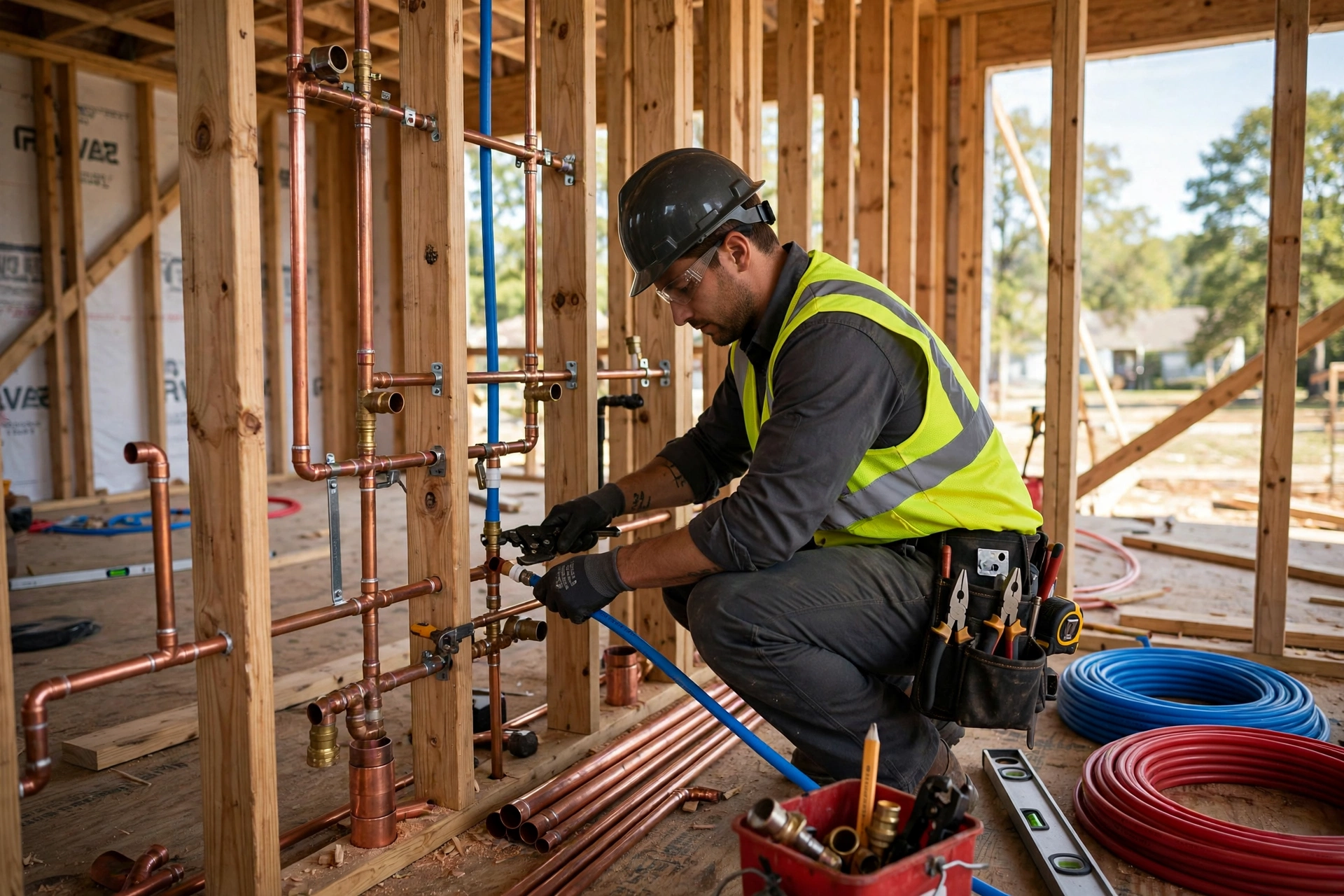
Rough-in is the second phase, after framing but before walls are closed. Installers run supply lines for hot and cold water, drain and waste lines, and vent pipes through walls and floors. They reach every future fixture: sinks, toilets, showers, tubs, laundry, water heater and outdoor faucets. Installers then test the system under pressure. Inspectors normally check this stage before insulation and drywall proceed. Once walls close, access disappears.
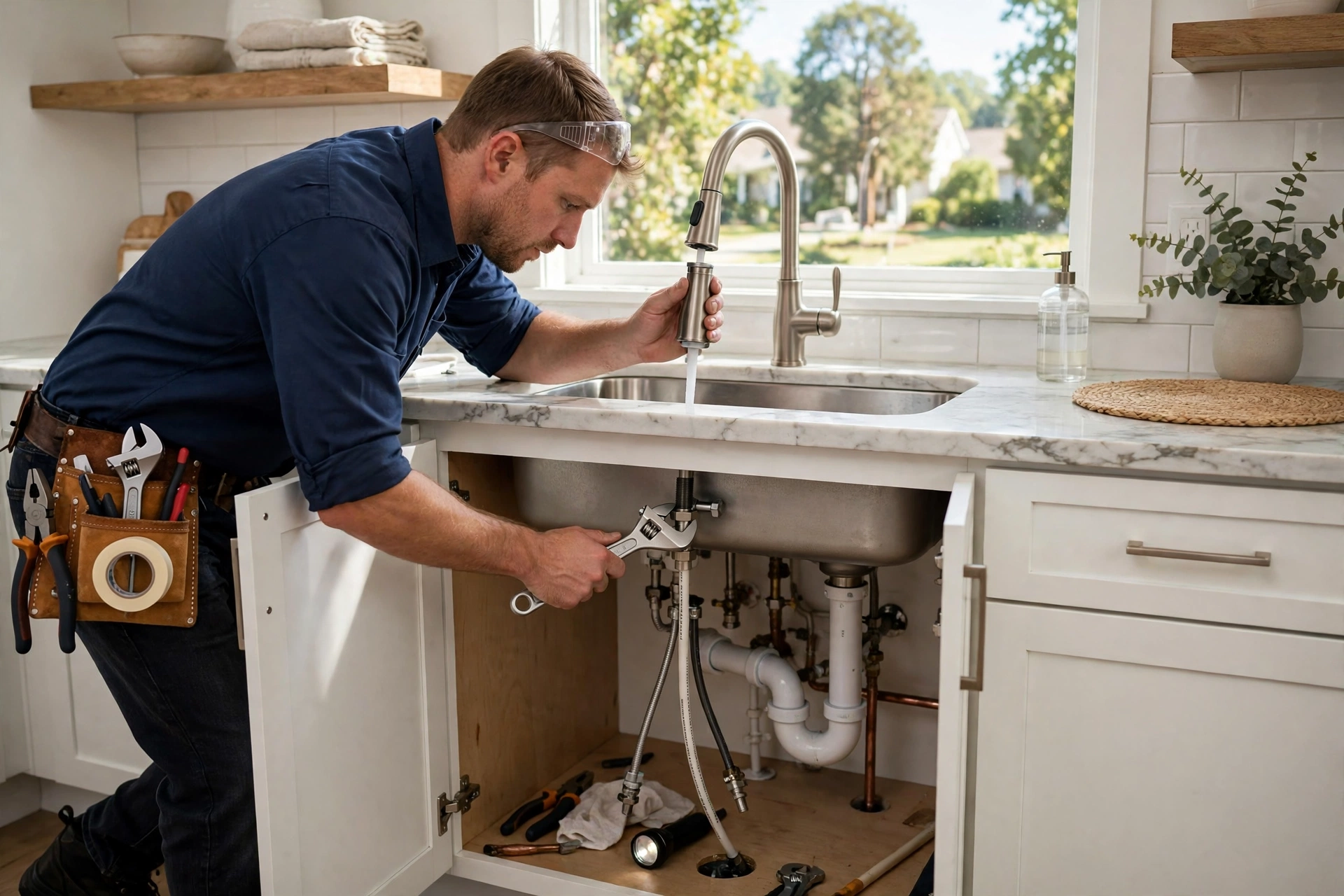
Finish, or trim-out, is the final phase. Installers fit and connect the fixtures: faucets, toilets, shower fittings, the water heater, dishwasher and any other appliances. Installers test everything again in real use — flow, drainage, leaks and hot water delivery — before handover.
Planning Decisions That Shape the Finished Home
Fixture layout and future plans. Grouping bathrooms, the kitchen and the laundry close together shortens pipe runs. It also improves hot water delivery and reduces cost. Just as important, plan for the future now. A roughed-in drain and supply for a basement bathroom you may finish later costs a fraction of adding it after the fact.
Pipe sizing and water pressure. Undersized supply lines often cause a classic complaint. Pressure drops when a second shower or the washing machine runs. Base sizing on the number of fixtures and simultaneous demand. Do not use the minimum you can get away with.
Venting and drainage slope. Drains need correct slope to carry waste away without leaving solids behind. Every drain also needs proper venting. That venting prevents traps from siphoning and sewer gas from entering the home. Poor venting shows up later as gurgling drains, slow drainage and odours that are maddening to trace once walls are closed.
Water heater placement and capacity. The heater’s location affects how long you wait for hot water at the furthest bathroom. Match capacity to the household: the number of bathrooms and occupants. Do not simply match whatever a plan template suggests.
Access for future service. Shut-off valves for individual fixtures and cleanouts on drain lines help. Sensible access to key connections also makes future repairs faster and cheaper. A system you can service easily costs less to own.
Inspections, Coordination and Common Mistakes
Inspectors check new construction plumbing at key stages, and sequencing matters. Your plumber must complete and test the rough-in before walls close. That means coordinating the plumber’s schedule tightly with the builder, framers and other trades. The most expensive mistakes in new construction plumbing are usually coordination mistakes. Examples include a drain in the wrong position for the fixture the owner actually chose, walls closed before testing, or fixture selections changed late without telling the plumber. Clear drawings, confirmed fixture lists and pressure testing at every stage prevent nearly all of them.
Other costly errors include forgetting outdoor faucets and future irrigation needs. Another is placing the water heater where a future leak would cause maximum damage with no drain provision. A third is running long, uninsulated hot water lines that waste water and energy on every use. Each is easy to address on a plan and awkward to address in a finished building.
Working With E&K Contractors on Your South Fulton Build
The process starts with the plans. That applies whether you are a homeowner building a custom home, a builder who needs a dependable plumbing partner, or a business fitting out a new commercial space. Bring the drawings, the fixture list and your questions about layout, pressure and future expansion. E&K Contractors provides new construction plumbing alongside its plumbing, septic, water heater, drainage and well services. It serves South Fulton and the Atlanta area, backed by more than 28 years of experience. To discuss your project, call E&K Contractors at 404-267-3647.
Frequently Asked Questions
When should a plumber be involved in a new build?
As early as the design stage. Drain and supply positions affect the slab, framing and fixture layout. So involve your plumber before ground work begins. That prevents the most expensive corrections. It also lets you plan rough-ins for future bathrooms or outdoor needs.
How long does new construction plumbing take?
It happens in stages across the build rather than all at once. Ground work comes before the foundation is completed. Rough-in follows framing. Finish work comes near the end of the project. The overall timeline depends on the size of the building, inspections and coordination with the other trades.
Can plumbing be planned for a bathroom we will finish later?
Yes, and it is one of the smartest investments in a new build. Roughing in drain, vent and supply lines during construction costs far less. That applies to a future basement or attic bathroom. Adding them afterwards means opening finished walls and floors.
Need help? Call E&K Contractors at 404-267-3647 — serving South Fulton, GA and the Atlanta area for over 28 years.
Related: New Construction Plumbing | Service Area: South Fulton, GA | E&K Contractors