Septic System Maintenance in McDonough, GA: Signs Your Septic Tank Needs Service
If your McDonough home has no connection to a city sewer line, your septic system works hard underground every day. It collects wastewater from every toilet, shower, sink, dishwasher and washing machine in the house. It separates solids from liquids and releases treated water safely into your drain field. With regular care, most homeowners barely think about it for years. Without that care, the first warning is often a slow drain. The last one is a sewage backup inside the home. Regular septic system maintenance in McDonough, GA keeps it working the way it should.
That is why routine septic system maintenance in McDonough, GA matters. Most septic failures do not happen overnight. They build up slowly, and they almost always give you warning signs first. Knowing those signs, and acting on them early, is the difference between a routine service visit and an expensive emergency.
How Your Septic System Works
A typical septic system has three main parts. The septic tank holds wastewater long enough for heavy solids to sink to the bottom as sludge. Oils and grease float to the top as scum. The clearer liquid in the middle flows out to the drain field, also called a leach field. There, a network of perforated pipes distributes the water into the soil, which filters it naturally as it moves downward.
Two things keep this process working: bacteria inside the tank that break down organic matter, and time. If too much water enters the tank at once, solids can escape into the drain field and clog it. Sludge and scum can do the same thing if they build up for too many years. A clogged drain field is the most costly septic problem a homeowner can face. Protecting it starts with the tank.
7 Signs Your Septic Tank Needs Service
Call for septic service in McDonough if you notice any of the following:
- Slow drains throughout the house. Toilets, tubs and showers all drain slowly at the same time, not just one sink.
- Gurgling sounds from drains or toilets when water is used elsewhere in the house.
- Sewage odors indoors, near the tank, or over the drain field, especially after laundry or heavy water use.
- Toilets that bubble, back up, or need to be flushed twice.
- Wet, spongy or unusually green grass over the drain field, even during dry weather.
- Standing water or dark, damp soil near the septic tank or drain field.
- Sewage backing up into the lowest drains in the home, such as a basement shower or floor drain. Treat this as an emergency and stop using water right away.
One slow drain usually points to a local clog. Several slow drains, odors and wet ground together point to the septic system itself. A chemical drain cleaner cannot fix that problem.
Septic Maintenance Habits That Prevent Expensive Repairs
Good maintenance is mostly about what goes into the system. It is also about how much water it has to handle at one time.
Pump on schedule. Sludge and scum do not disappear. Over time they reduce the working space in the tank. Once that space gets too small, solids start moving toward the drain field. How often a tank needs pumping depends on its size. It also depends on the number of people in the home and how much water the household uses. A professional inspection is the reliable way to know where your tank stands.
Spread out water use. Running the dishwasher, several loads of laundry and back-to-back showers in the same hour is too much at once. The tank cannot settle that much water so fast. Spacing laundry across the week and fixing leaking toilets and faucets promptly keeps the load manageable.
Watch what you flush and pour. Only human waste and toilet paper belong in a toilet. Do not flush wipes — including products labelled flushable — paper towels or feminine hygiene products. Grease, coffee grounds, paint and harsh chemicals do not belong in the system either. These items do not break down the way septic bacteria need them to. They can also kill the bacteria your system depends on.
Protect the drain field. Do not drive or park vehicles over it. Do not build patios or sheds on it, and keep tree and shrub roots away from it. Roots seek out the moisture in drain field lines and are a common cause of blockages.
Keep records. Note the date of every pumping, inspection and repair. Keep a simple sketch of where your tank and drain field are located. It saves time on every future visit and helps the next homeowner, too.
When to Call a Professional — and What to Expect
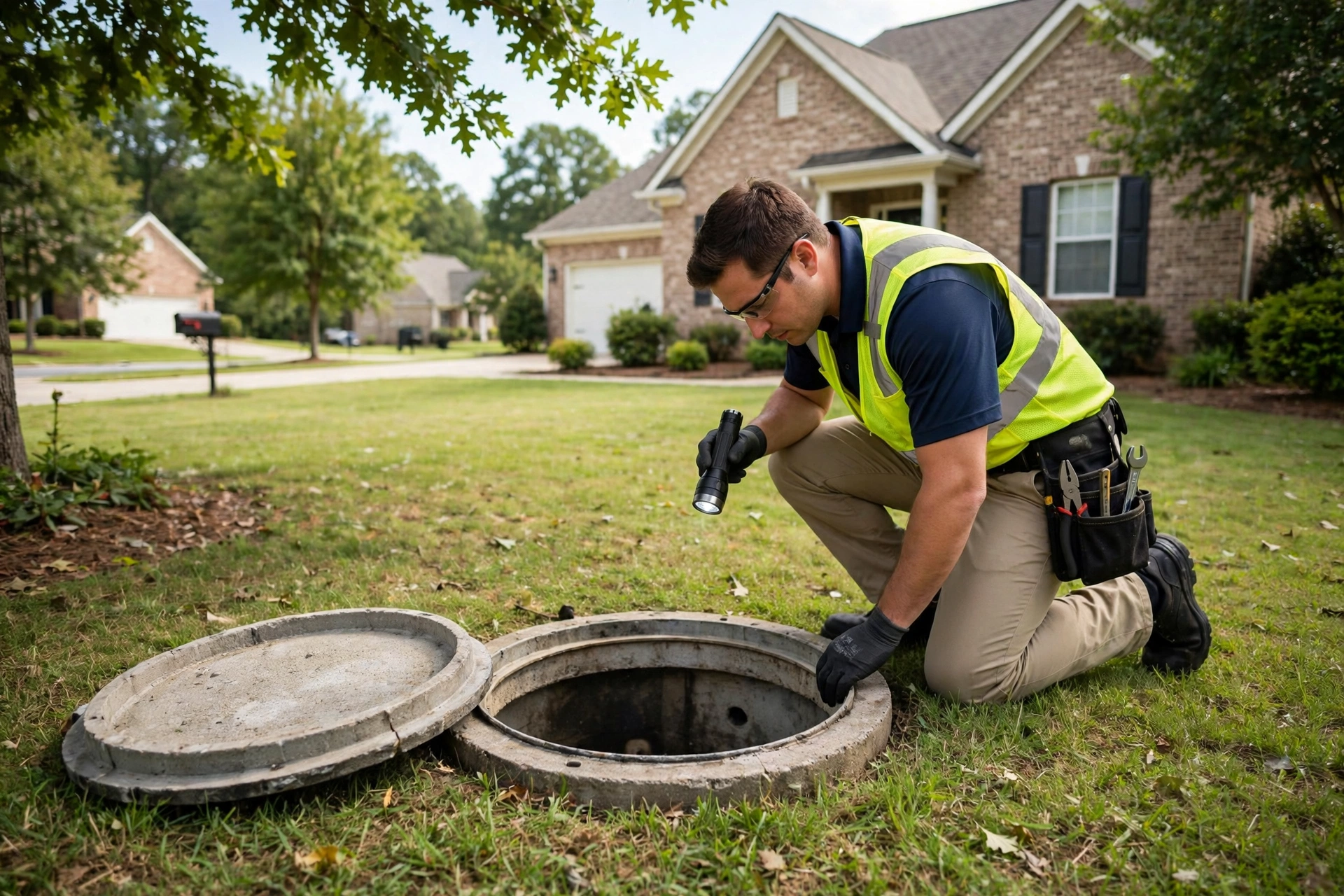
If you are seeing warning signs, an inspection is the right next step. The same is true if you do not know when your tank was last pumped. It is also true if you are buying a home in McDonough with a septic system. During a service visit, a technician can check sludge and scum levels. They can inspect the tank, baffles and filters. They can also look for leaks or root intrusion and check the drain field for signs of saturation. Catching a full tank or a failing baffle at this stage is straightforward. Waiting until wastewater surfaces in the yard or backs up into the house is not.
E&K Contractors provides septic tank and plumbing services for homes and businesses in McDonough and across the Atlanta area. The company brings more than 28 years of experience. If your drains have slowed down or you are noticing odors, call E&K Contractors at 404-267-3647. Do the same if it has simply been too long since your last service. Schedule septic service before a small warning becomes a big repair.
Septic System Maintenance in McDonough, GA: Frequently Asked Questions
How do I know if my home in McDonough has a septic system?
If you do not receive a sewer bill from the city or county, you most likely have a septic system. The same is true if your home is outside a sewer service area. You may also see a tank lid or cleanout in the yard. A plumber can confirm the location and condition of the system during an inspection.
Can I use a garbage disposal with a septic system?
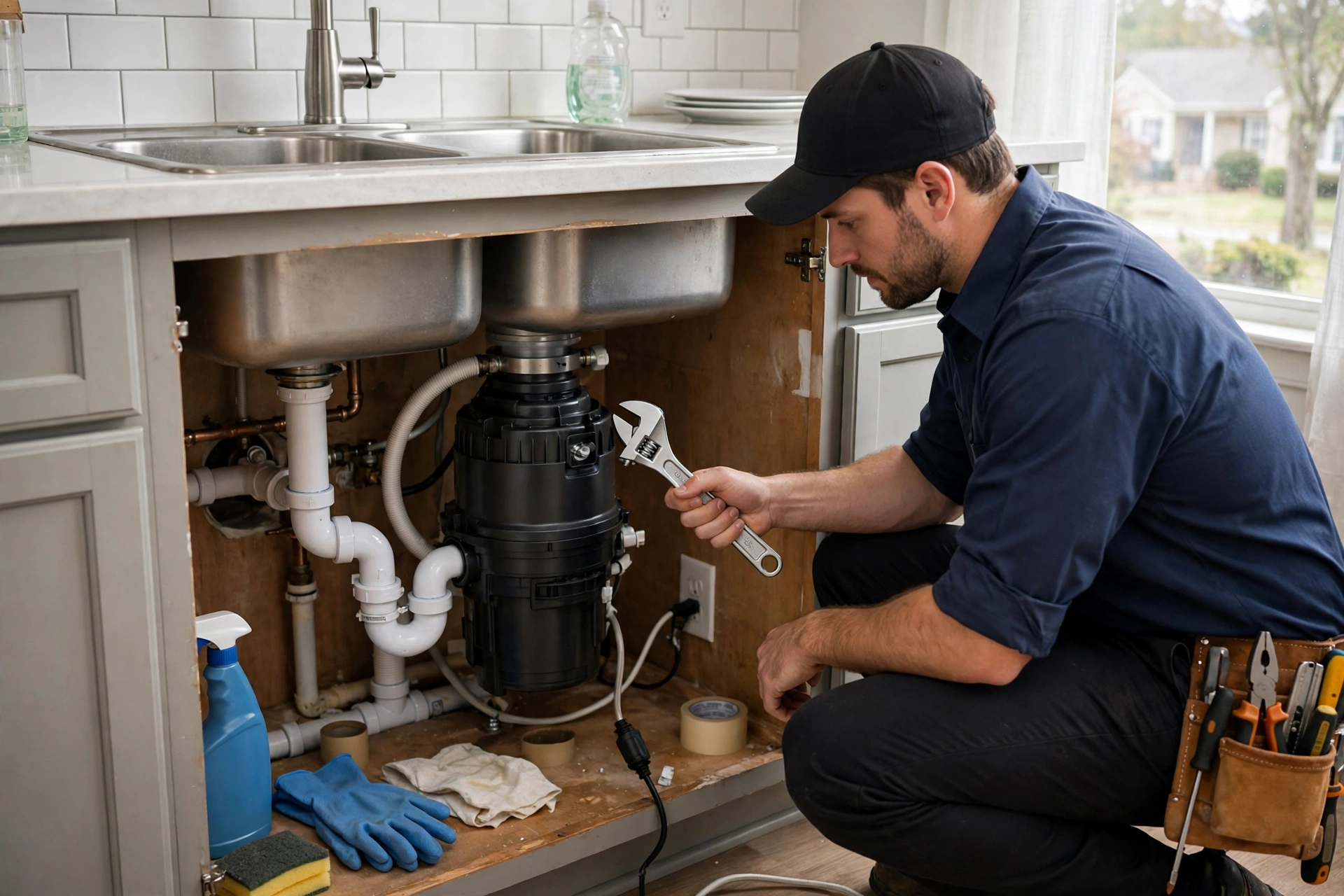
You can, but use it sparingly. Ground food waste adds solids to the tank faster. That means the tank fills sooner and may need pumping more often. Scraping plates into the trash instead of the disposal is the gentler option for your system.
What should I do if sewage is backing up into my house?
Stop using all water in the home right away — no flushing, laundry, showers or dishwashing — and call a plumber immediately. Continued water use will make the backup worse. Keep children and pets away from affected areas until a professional has serviced the system and cleaned the area.
Need help? Call E&K Contractors at 404-267-3647 — serving McDonough, GA and the Atlanta area for over 28 years.
Related: Septic Services | Service Area: McDonough, GA | E&K Contractors